Saturday, November 23, 2013

Monday, November 18, 2013
PLN Project #2: Final Report
I haven't added much to my personalized learning network since you guys last saw my first report. I added a few more tiles; ones that I discovered I would need chronically in my future and that I find useful in EDM. I have still have been using the Symbaloo site for my personalized learning network, and I use it every single day as my homepage. I have introduced it and recommended it to everyone who is constantly surfing the web.


If you look directly under my Google Drive button, you will see a white tile with an orange "R". This is iRubrics; an absolutely amazing sites where you can search through thousands of rubrics and even create your own. If you use rubrics for any grade level, I highly recommend this site, you can create an account for FREE. Another great thing about iRubrics is when you log on, you can touch or click on the rubric and grade without ever using paper. Curious? To find out more, check it out for yourself!
The next is the Teaching Tolerance website tile. It is located directly to the right of iRubrics; green background with a small square tile. I have turned to the Teaching Tolerance website for many of my diversity and multicultural educational lesson plans and ideas for classes. It provides a variety of subject and topics that can be incorporated into any grade school classroom, or can even be altered to service college students. I have referenced the Teaching Tolerance website many times in my classes this semester, and I know I will continue to use it throughout my teaching career.
Now, to the right to the Teaching Tolerance website is my SMART Board website tile. EDM 310 is all about incorporate technology in your classroom; one major way has been through the SMART Board. I use this tile to take me to the websites resources, interactive lesson plans and downloadable content for the SMART Board. I want to familiarize myself with it now so I wont be a spring chicken when using the SMART Board in my first few years of teaching. I have visited this site many times throughout EDM 310 and decided it was time for this website to have its own special tile.
To the right of that is my Google Sites tab. I added this tile when for project #14 lesson plans where it was an option to use Google Sites to house all the details of our lesson plans. Ever since I have fallen in love with Google Sites. It's such a perfect site and you can use it for any presentation. Instead of jamming all of my information on a Presentation, or Power Point, you can easily create a site. I had to make Google Sites a tile because I found myself using it for the next lesson plan, and then another lesson plan in a different class. Google Sites can be so informative, especially if your classroom is technology friendly and is a frequent user of blogs. Google Sites is so easy to work, it took me three minutes to learn how to create a site. If you're a teacher who encourages technology in your classroom. CHECK OUT THIS SITE!
The huge compass tile underneath the iRubrics file is the Alabama College and Career Ready Standards. We reference these all the time in EDM 310. We use them for many activities including all of our lesson plans, I will continue to use them throughout my entire career. Now, last but not least, underneath the Google Sites tile I added a Hotmail tile because I have a Windows email address.
After creating and getting accustomed to my personalized learning network, there is no way I would go back to the way I used to run things of always typing and switching through tabs. Symbaloo has made my life so much more organized, it has allowed me to personalize down to a T, how I want it set up. I don't know what I would do without it and my future students are most definitely going to have their own personalized learning network.
Blog Post #14: Bullying
Blog Post 14 Instructions:
1. Watch three of the five Bully Movie Clips from the documentary Bully on YouTube.
a. Bully #1 Movie CLIP - Tyler's Dad
b. Bully #2 Movie CLIP - Kelby
c. Bully #3 Movie CLIP - Handshake
d. Bully #4 Movie CLIP - Bus Ride
e. Bully #5 Movie CLIP - Alex and his Mom
2. Talk about what you think bullying is and why bullying happens.
3. What can you do to change things?
________________________________________________________
This week Dr. Strange wanted us to create a lesson plan in our area of specialty, that I think he should have created and assigned for in EDM 310. My area of specialty happens to be elementary education I chose the topic of bullying. Why? Because this is something I am very passionate about changing. It doesn't matter what age you are, bullying exposes itself throughout many ages of life and in many forms, . There's the physical type of bully; who likes to physically inflect pain on someone. There's the the verbal bully who uses their words to strike out. There's the passive aggressive bully; the emotional bully, the list could go on and on.
 Throughout the years, I have formed my own golden rule through my experiences...don't be hurtful. That's it, just don't do or say hurtful things to other people period. So why is bullying an infection in our schools? What causes a bully? In fact....what is a bully? I looked around and developed a conglomerate definition of what a bully is; A bully is one that uses force, threats, and actions that are meant to abuse, intimidate, and to aggressively impose domination over the victim.
However, the problem with how bullying in schools is approached could be the problem. Most of the time, when a bullying situation is confronted (and this is coming from personal experience), the bullied are those that receive the majority of the attention; however, not the right type of attention. The bullied gets told to "get over it", that "kids will be kids", while the bullies see, to just be dismissed and permissible.
What teachers do not see, hardly see, or even choose not to see, is the perspective of the bully. Why do bullies bully? Think about it for a second...really think. The way you treat others is a DIRECT reflection of how you treat yourself. When you make other suffer it is because YOU YOURSELF is suffering. If teachers took more time to focus on why the bully is bullying and what is making him suffer, you can gain insight and a better understand of how to handle the situation and nip it in the bud. Children deeply want someone to understand them, it is crucial to take the time to understand them and develop a plan of action.
 The next thing you need do as an educator and as a defender of these children's futures, you need to talk to someone, just as the students needs to talk to someone about their bullying problem. There is power in numbers. You need to talk to the principle, the vice principle, parents/guardians and other teachers, so that all of you are in collaboration and can be aware and to take charge of the bullying or stop it in its tracks. TAKE A STAND. These are human lives I'm talking about.
However, The absolute first thing you can do to prevent or stop bullying is to create a positive learning environment. If you want your school and your classroom to be a safe and effective learning environment, you must stay strict and firm when dealing with bullies. When it comes to your classroom, you need to set ruled and guild lines and make sure they are fully understood, you may not be able to stop bullying completely, but at least you can take charge of your classroom. and see to it that something is done, before bullies diminish the learning equilibrium.
1. Watch three of the five Bully Movie Clips from the documentary Bully on YouTube.
a. Bully #1 Movie CLIP - Tyler's Dad
b. Bully #2 Movie CLIP - Kelby
c. Bully #3 Movie CLIP - Handshake
d. Bully #4 Movie CLIP - Bus Ride
e. Bully #5 Movie CLIP - Alex and his Mom
2. Talk about what you think bullying is and why bullying happens.
3. What can you do to change things?
________________________________________________________
This week Dr. Strange wanted us to create a lesson plan in our area of specialty, that I think he should have created and assigned for in EDM 310. My area of specialty happens to be elementary education I chose the topic of bullying. Why? Because this is something I am very passionate about changing. It doesn't matter what age you are, bullying exposes itself throughout many ages of life and in many forms, . There's the physical type of bully; who likes to physically inflect pain on someone. There's the the verbal bully who uses their words to strike out. There's the passive aggressive bully; the emotional bully, the list could go on and on.

However, the problem with how bullying in schools is approached could be the problem. Most of the time, when a bullying situation is confronted (and this is coming from personal experience), the bullied are those that receive the majority of the attention; however, not the right type of attention. The bullied gets told to "get over it", that "kids will be kids", while the bullies see, to just be dismissed and permissible.
What teachers do not see, hardly see, or even choose not to see, is the perspective of the bully. Why do bullies bully? Think about it for a second...really think. The way you treat others is a DIRECT reflection of how you treat yourself. When you make other suffer it is because YOU YOURSELF is suffering. If teachers took more time to focus on why the bully is bullying and what is making him suffer, you can gain insight and a better understand of how to handle the situation and nip it in the bud. Children deeply want someone to understand them, it is crucial to take the time to understand them and develop a plan of action.
 The next thing you need do as an educator and as a defender of these children's futures, you need to talk to someone, just as the students needs to talk to someone about their bullying problem. There is power in numbers. You need to talk to the principle, the vice principle, parents/guardians and other teachers, so that all of you are in collaboration and can be aware and to take charge of the bullying or stop it in its tracks. TAKE A STAND. These are human lives I'm talking about.
However, The absolute first thing you can do to prevent or stop bullying is to create a positive learning environment. If you want your school and your classroom to be a safe and effective learning environment, you must stay strict and firm when dealing with bullies. When it comes to your classroom, you need to set ruled and guild lines and make sure they are fully understood, you may not be able to stop bullying completely, but at least you can take charge of your classroom. and see to it that something is done, before bullies diminish the learning equilibrium.
Saturday, November 16, 2013
Blog Post #13
Video 1: Shane Koyczan: To This Day...for the Bullied and Beautiful: By Lauren Bradley
First off, wow; Shane Koyczan couldn't have
presented a more brilliant speech. “To This Day...for the Bullied and the Beautiful” is a speech on what it is like to be young and different in today’s world; and if you’re anything like me...grade school wasn’t easy. Koyczan talks about how he would constantly hear, “Just stand up for yourself, you have to stand up for yourself.” But how do we do this, if we don’t even know who we are. You know kids, one day they want to be a fireman, the next a dentist; but what is the fallacy in this? Or is there even one at all? The education system expects children to define themselves at such a young, inexperienced age; and if you did not define yourself, someone would for you; teachers, faculty, students, "grown-ups". Everyday another child is defining themselves by what other people say or think about them; fag, gay, stupid, ugly…and we are expected to accept this.
You are being told what you are but at the same time, you are being asked who you want to become. You know those high school days of visiting the counseling services and the career centers by force; being asked who you want to become. Well...I’m myself aren't I? Koyczan's experience with this was about the same as mine. He was asked, ‘’What do you want to be when you grow up?’’ he replied, “A writer.” followed by, “Choose something realistic.” This is the problem with these types of actions; they asked him who he wanted to be, but told him what not to be. Why can’t we be who we already are? Why do people refuse to accept that? We are expected to somehow must become what we are not, sacrificing what we are, to inherit the "masquerade" of what we will be.

But what made his dreams so easily dismissive? Who has the power and the right to shutdown someone else’s dreams, to tell them, “No, you can’t be that.” And at the same time, his dreams were being defined by some else, being defined as stupid, unrealistic and so on. But just like a boomerang, his dreams came back to him, and he used those dreams to take a stand. He told the audience one of the first lines of one of his first poems was about a world who demanded that he hate himself, and at age of fifteen through eighteen, he hated himself for becoming someone he knew he despised; a bully. When he was nineteen he wrote the words, “I will love myself, despite the ease in which I lean towards the opposite.”
With this he expressed that he was not the only kid who grew up like this, that is or was bullied and hurt by people's words and actions. So kids are growing up, being forced to believe they aren't special, that no one will ever grow to love them, that that are unimportant. To this day kids are still being called names, still being hurt by other children who are raised to believe that looks and beauty are the of the utmost importance; and anything less...is tossed aside. He says if you don’t think you are beautiful, if you don’t think you are perfect, get a new mirror, look a little closer, stare a little longer, because there is something inside you that made you keep going, that pushed you just a little further, despite everyone who told you, “You can’t.” As kids and as adults we must fight and push to believe that those people are wrong.
As educators we HAVE to take a stand. No longer will the phrase “Kids will be kids” past my ears while another child sits in silent agony, hopeless from the pain of fellow classmates have caused. The education system needs to wake up!!! It does not understand that this type is behavior hinders learning in such a tremendous way, yet it continues to happen every day in schools all around the world. We must find a way to change this, but first, by changing ourselves. Maybe you were the bully or maybe you were the bullied, but no human life should ever have to go through this pain, especially in a place that should be embracing who you are and who you are going to become.
Video 2: Alison Gopnik: What do
babies think?: By Sarah Barnett
Alison Gopnik explains how babies and children think. She is a wonderful speaker and full of tons of information. She delivered this presentation beautifully. To sum up the video; she basically says that children and babies are like sponges. They soak up information better than adults. She showed a few pictures of a study of fifteen-eighteen month olds; the adult gave the children two bowls with broccoli and goldfish in the bowls. The adults then observed which bowl this children would choose. As you would imagine they mainly chose the goldfish, but who wouldn't. Then the adults pretended to like the broccoli and not the goldfish, after that they asked the children to give them something out of the bowls.

This research showed that most of the eighteen month olds gave the adults the broccoli because the adults pretended they liked it. So, basically the eighteen month olds responded to instruction and absorbed what the task was to be done. Although, the fifteen month olds just stared and handed out goldfish. We learned from this video that in all actuality, children are the quickest and most efficient when it comes to learning. Children have brains that are always willing to learn new things. Alison Gopnik also said that when we (adults) say children are not paying attention, we are really saying they are bad at paying attention. This statement is so true because it takes children a few tries or experiments to figure out the correct answer. All in all we learned some great information.
Video 3: Mae Jemison: Teach Arts
and Sciences Together: by Malary Booker
Mae Jemison says that we are failing to act in the future. She says that our mission is to integrate Science and art together. If we keep thinking that Science and art are separate then we are in trouble. Many people say that scientists are not creative and this is not the case. Mae Jemison is an astronaut, a doctor, an art collector, and a dancer. She told stories from her own education and from her time in space. She calls on educators to teach both arts and sciences, both intuition and logic, as one to create bold thinkers. Mae told about how she became an astronaut and how she incorporated creativity into it. A quote from her is:
“Science and art are two parts of one thing. They come from one
source and that source is creativity.”
This TED Talk video made us wonder about Mae Jemison’s whole biography so we looked it up. If you go to this link there is a mini biography video and a biography of Mae Jemison: http://www.biography.com/people/mae-c-jemison-9542378 . She is very inspiring and we encourage you to read her biography and learn from it!

Tuesday, November 12, 2013
Bully
This week I discovered a documentary on Netflix that follows various families from different areas and gets an up close view of bullying and its effect on children. I was in shock by what I saw. I am making this post because I want every educator, future educator, or anyone else for that matter, to watch it for themselves and take a stand.


C4T #4

Comment #1:
Comment number one was on his second most recent post called "Podcast410: Powerful listening - Powerful Influence: A Conversation with Tim Hast." Tim Hast is a friend of Wesley and also the author of the book "Powerful Listening. Powerful Influence. Work Better. Live Better. Love Better: by Mastering the Art of Skillful Listening." Tim's book focuses s on people that already obtain skills on and off the professional world, but are missing that spark or that one skill that really bridges the gap of communication. Therefore, the podcast was mainly about listening and why skills for listening are so important in the classroom, the home and so many other places.

Hast also shared some findings of some research he conducted recently. He found that the US Department of Labor conduced a study and found that in order to remain competitive in the 21st century-on, we need to teach active listening skills at the elementary and secondary levels; it needs to be part of the curriculum. He said there are four simple tips to improve listening: (1) Listen Patiently, when someone is speaking to you, don't be thinking about your answer or other things, focus on them. (2) Listen with your body, body language! (3) Listen with your voice, anything that reinforces the fact that you are listening and interested. (4) Listen with your mind, if you visualize what the person is telling you, you will be able to understand more efficiently and be more engaged.
When I left my comment, the first thing I stated was that this post was a slap back to reality. I discussed how lately I haven't been listening; especially to my friends and family. I talked about how just last night my best friend was telling me a story, and I found my mind wandering off thinking about other things. Is this the way I would want to be treated? Because I definitely wouldn't want someone looking at their phone, texting and looking into space while I am talking to them. Another thing I dislike about when I don't listen is that when I come back to the story I have no idea what is going on, so I can't empathize with the person.
Listening is key to understanding, especially when you are dealing with teaching elementary students. It is absolutely crucial that you listen and understand your students; it is part of the learning experience. You listen to your students and you adjust and respond accordingly, listening can be the window to success. The things I learned from this podcast will be put into use right away! Because I want treat others how I want to be treated. The four things we learned will also go into my everyday life as well as in my elementary curriculum. I realized from this post that listening is such a needed skill for success in the 21st century and centuries to come. It is my duty as a teacher to the absolute best I can to ensure the success of my students.
Comment #2:
Okay, I seriously couldn't have been more lucky when it comes to "Comments 4 Teachers". The post that I got to read and comment on was a perfect subject for what is going on in my life; the tittle is "Empowering Women, Worldwide by Creative, Handmade Designs." In this blog post Freyer got to meet with Nicole Moore. Nicole Moore is part of an organization called Creative Women of the World; which is a non-profit organization that helps support women in other countries that are starting out with a small business. This blog includes includes about a three minute video, in which she explains what this organization does, and how the selling of their handmade products can make a huge impact.
What was truly amazing about being assigned to this post was that during Nicole's speech, she talks about living in Africa and how they need education. She says that people really don't understand the impact that education can have on these people. This is crazy because it has been my dream to go join the Peace Corps and teach in Africa and to give all I have into giving someone else education, who cannot afford it, or is less fortunate than me.
 I am also a firm believer in empowering women and diminishing gender roles. One of my main goals as a future teacher is to knock down these so called "gender roles" and have equality for everyone. Often by being born a female, the world makes us grow up to believe that we they are superior and cannot compete against a male. Women are often objectified and mocked, while men take on the "leader" roles. We see Disney cartoon of princesses waiting for a strong man to save her; then often as we grow up...there are some female hero's, but they are often sexualized, materialized, and glamorized. I want young girls to empower themselves and use their education to grow and change history. I think receiving this post wasn't just coincidence. I want to do my best to educate these young women to become strong, self motivated leaders.
When I left the comment, I just talked about how exciting it was to see someone, especially another women, standing up for change. She is working hard to raise money for a non-profit organization, not something a lot of people would do. I told him that I appreciate and respect him so much for being a male and fighting for the cause of women. I told him often people do not see the struggle women have now a days, or maybe they see it and do not acknowledge it. Either way I thanked him in his support of the Creative Women of the World.
Towards the end, Freyer left some pictures and some snapshots for the online store of the CWOW, which is http://cwow.storenvy.com. Check it out for yourself

C4K for November
Comment #1:
Right off the bat I recognized the homepage from a C4K I wrote earlier in the semester. Pt. England School's the name! And is located in Auckland, New Zealand. I always get excited to comment on these students blog because it is awesome to connect and learn from someone half-way across the world. The student I was assigned to was a seven year student named Cheyanne. I commented on a post from October 25, 2013 titled "My First Day at Pt England School." Within this post she expressed her attitudes and feelings toward her first day of school. She said she was separated from her brother during class, when she walked into the new room she was happy and joyful but all the kids were looking at her like she did something wrong, and on top of that she started cross country that she was already having mixed feelings about; but she persevered and began to enjoy it.
I like to see kids being so honest, especially at a young age and especially through technology such as her blog. I feel for Cheyanne because I know how people can be during elementary and secondary schooling, and I know how hard it can be when people are often taught to perceive "different" as "bad". I was also proud that she kept at something she wasn't 100% about. When I left my comment I was hoping to cheer her up a little (not that she was too sad). I of course introduced myself followed by congratulating her on her blog. It had an appealing deep blue background and you could tell by her archive that she had been working on it for a long time.
 I told her I read her post, then I empathized with her; it is always nice to know that someone understands what you are going through. I told her not to let the students bother her and that sometimes people see different as bad, but everyone is perfect regardless or their opinions. I also praised her for not giving up on cross country. I told her I ran cross country once and that she should do it only if it makes her happy. Then I wished her good luck and finished the comment. If you are interested in viewing her blog visit http://pescheyannem.blogspot.com/
Comment #2:
Mrs. Yolli's class blog was unlike anything I had every seen since I began EDM 310; this blog was a complete portal to learning. You could tell from the looks of the homepage that these third grades were already learning so much. Each post is filled and decorated with exciting educational information. I believe posts like these making learning so much more effortless and can even disguise learning. Mrs. Yollis and her class is located right outside Los Angeles, and like myself is a teacher truly dedicated to learning through technology. I encourage everyone who passes this sentence to check out her blog
http://yollisclassblog.blogspot.com. It will be worth it! Mrs. Yollis blog is such an inspiration and I know it can inspire you as well.
http://yollisclassblog.blogspot.com. It will be worth it! Mrs. Yollis blog is such an inspiration and I know it can inspire you as well.
 What I loved about these blog posts is they are not just housekeeping posts but informational posts, learning posts. Within these post, their are lessons and interactive videos. What is also great about posting lessons like this online, is that students can access them from virtually anywhere at anytime; in the classroom, the library, the computer lab, and even the home! They can even get their whole family involved and this is where my post comes in.
I was assigned to comment on a particular post. The name of this post was "How to write a Compound Sentence." (I would also like to note that November for Mrs. Yollis's class is family blogging month). This post is obviously on compound sentences and what exactly makes that sentence. Well in this post Mrs. Yollis defines a compound sentence and gives a few examples. Here is a little piece of the post.
A compound sentence:
- Combines two shorter sentences (so has TWO subjects)
- Joins the two sentences with a conjunction (and, or, but, so)
- The comma goes BEFORE the conjunction.
* * * * *
Here are some sample compound sentences, and they are all about Thanksgiving!
(Hey, that's a compound sentence!)
Thanksgiving is celebrated on the fourth Thursday in November, and many families gather for a traditional feast.
Then she presents the class with a challenge she wrote, "In the comment section, tell about your plans for thanksgiving. Be sure to include at least two COMPOUND SENTENCES! This is such an effortless way to self motivate students to learn. There is no pressure behind this challenge, only to include two compound sentences. It is already sparking interest by getting your family involved, and it is available at any time! Blog posts and comments are so much more interactive than boring worksheets. Mrs. Yolli's blog is such a great reference to new coming technology inspired teachers
I left two separate comments on this post. The first one just explaining who I was and why I was commenting. I told Mrs. Yollis and the class that what I love about this post is it is so effortlessly educational and fun. Post like this get right to point, and involving your family makes it more interesting! What I have learned from the C4K series is that blogs create an audience for the students, whether it be parents, guardians or people halfway across the world, they are motivated to learn. I let them know that I have not yet seen a blog like this are it is greatly appreciated. The second comment pertained to the challenge of writing two compound sentences, where I told the class about my holiday plans.
Now that "Comments 4 Kids" has taken its final lap, I just want to take some time and share my feelings all of the things I have learned from "Comment 4 Kids". I have learned so much, far more than I ever imagined going into EDM 310. I had no idea that technology could change the learning experiences of children all across the world for the better. A worldly audience through the use of blogs is what I will take away the most from my experience.
Friday, November 8, 2013
Blog Post #12
Collaborative Blog Post: Sarah Barnett, Malary Booker, Lauren Bradley
I’m sure many of you are familiar
with the TED Talks Series; for those of you who are not familiar with TED
Talks, it is a set of informative and educational conferences, presented by recognizable
speakers from all around the world and runs under the slogan “Ideas Worth
Sharing”. This particular TED Talks
video was presented by Sir Ken Robinson. Ken Robinson led the British
Government Advisory Committee in 1988 on creative and cultural education quest
where we was eventually Knighted for his work. He is a New York Time’s Best
Seller for the book The Element: How Finding Your Passion Changes Everything.,
and has been translated into twenty-one different languages, and has now gained
millions of views for his TED Talks conference videos.
Changing Education
Paradigms

Some children can work more
efficiently in small/large groups, work better alone, or even may learn more efficiently
at different times of the day. In today’s world we have access to so many
electronics that when they get to school, they are bored! We have to make
learning engaging and enjoyable while they are still students. Sir Ken Robinson
talks a lot about ADHD. A cool fact about ADHD was that children more on the
east coast are prescribed medication. He talks about too many children are on
medication to focus in school. The reason children have ADHD is because they
sit there and do busy work all day; while they have all this energy and curiosity
balled up inside them. All in all we really enjoyed this video. Sir Ken
Robinson did a great job explaining changing education paradigms. We hope you
all go check out his video and learn just as much as we did.
The Importance of
Creativity Video
 In this video Sir Ken Robinson
talks about creating an education system that nurtures rather than undermines
creativity. He believes that creativity is as important as literacy. He told a
story about a little girl who only paid attention in class during drawing time.
When the teacher asked her what she was drawing she replied, “I am drawing
God.” The teacher said, “No one knows what God looks like.” The little girl
then replied, “They will in a minute.” This is an appealing story, but it also
lets us know how creative and insightful children really can be. Who are we as
teachers to stand in the way of that? Sir Ken Robinson said, “If you are not
prepared to be wrong, then you will never come up with anything original.”
In this video Sir Ken Robinson
talks about creating an education system that nurtures rather than undermines
creativity. He believes that creativity is as important as literacy. He told a
story about a little girl who only paid attention in class during drawing time.
When the teacher asked her what she was drawing she replied, “I am drawing
God.” The teacher said, “No one knows what God looks like.” The little girl
then replied, “They will in a minute.” This is an appealing story, but it also
lets us know how creative and insightful children really can be. Who are we as
teachers to stand in the way of that? Sir Ken Robinson said, “If you are not
prepared to be wrong, then you will never come up with anything original.”
As future
teachers, we will one day need to let our students know that it is okay to be
wrong. Sir Robinson says that by teaching kids they are wrong; we are
undermining their creativity. This could not be more true. Encourage kids that
there is more than one way to do something. The one thing that we completely
agree with is when Sir Ken Robinson said, “We do not grow into creativity, we
grow out of it.” All kids are born with a creative gene. What they do with that
gene when they get older makes them who they are. Education Systems are now
based fully on academic ability. Creativity really needs to be pushed now more
than ever. Academic ability is important for students to achieve, but so is
creativity.
How to Escape
Educations Death Valley
In Sir Ken Robinson’s TED Talks
video titled “How to Escape Educations Death Valley.” he discusses three
principles that are required for a fit and healthy mind and how your current
education status actually works against these principles in what is called the
educational “death valley”. He starts off by discussing the recent “No Child
Left Behind Act”; he described it as “Ironic” because he says, “It is leaving
millions of children behind.” He goes on to explain that in some parts of the
country, the dropout rate of high school students is up to 60%, then in Native
American communities, it is up to 80%. If you cut that number in half and
estimate the net-gain earned by these students, it was be somewhere around...a
trillion dollars; and that it actually costs more to come up with money and
labor created by these so called “drop-outs”.
 He states that what those
statistics don’t show you, are the percentages of kids that are in school, yet
are being disengaged, uninterested and not gaining any benefit from the
educational system. Despite the fact that America spend more money on education
and its progression than any other country, despite the fact that America on
average has smaller classrooms than other countries, despite all the
conferences, speaks and presentation, our progression is seems to be moving in
the wrong direction. He suggests that real education gives weight to the arts,
to the humanities, to physical education; not just science and math and gives
recognition to other talents.
He states that what those
statistics don’t show you, are the percentages of kids that are in school, yet
are being disengaged, uninterested and not gaining any benefit from the
educational system. Despite the fact that America spend more money on education
and its progression than any other country, despite the fact that America on
average has smaller classrooms than other countries, despite all the
conferences, speaks and presentation, our progression is seems to be moving in
the wrong direction. He suggests that real education gives weight to the arts,
to the humanities, to physical education; not just science and math and gives
recognition to other talents.
From here Robinson shares the three
principles for the human mind to flourish. Let’s start with principle one, that
humans are different and diverse by nature. He expressed that No Child Left
Behind focuses more on conformity then celebrating children’s diversity.
Principle number two states that curiosity is a great thing. Curiosity causes
humans to learn with little or no assistance. He states that standardized
testing is acceptable for measuring outcomes, but in no way should obstruct
learning. Principle three states that human are curious by nature, but being
stuck in a “paradigm of standardization” is killing our creativity.
So how do we change things and
where do we even start? Robinson gave us some imperatives to counteract the
principles. Imperative number one states that we MUST MUST MUST individualize
learning and personalize our curriculum down to each and every student.
Imperative number two states that we must hold high status’s and bars for the
teaching profession, that it should be seen as an investment not a cost.
Imperative number three says we must make our schools responsible for the
decision making, who else knows what better decision to make about the students
rather than their own school?
We believe a HUGE lesson is to be
learned by all of us, thanks to Sir Ken Robinson. He speaks the truth when
dealing with the education system, no longer is he ignoring the elephant in the
room. If we want our future generations to be successful and to grow up and be
able to compete with their peers in this swiftly changing world; we have to
take a step back and focus on our students. No longer should it be about
standardized testing and numbers, it should be about celebrating diversity.
Tuesday, November 5, 2013
Sunday, November 3, 2013
Saturday, November 2, 2013
Friday, November 1, 2013
Blog Post #11
Week eleven has really gotten me revved up about teaching. Not only from Project #12 and learning how to work the SMART Board (which I thought was very exciting), but from this weeks blog post and the videos that came from it. I have learned so much from this course already, I argue with myself about saving my thoughts for the last post, or write them now.
Part of my enthusiasm comes from a previous C4T and C4K posts and from exploring her blog. If you haven't already heard about Kathy Cassidy or have read about her on previously on my blog...you know who I am talking about. For those of you who don't Kathy Cassidy twitter refers to herself and her learning style as a "Grade one teacher inviting the world into her classroom".
Her classroom has achieved that goal of reaching a worldwide audience, and it is truly inspiring and motivating her students to learn in a new way. through the use of classroom and individual student's blogs to Skyping with people half-way across the world. Kathy Cassidy has become one of the most inspiring 21st century teachers and her blog has become a reference tool in crafting my future career as well as my current educational path.
Video #1:
The first video I watched was of Kathy Cassidy's class and how their classroom blends learning with technology It involved going a little more in depth, through the use of videos, pictures and narration by the students, to show us the various technological tools they use in their classroom. It showed pictures of the student's blog, videos of their classroom skyping, pictures of collaborative blog work.
The video was divided into five parts. Blogs, Webpage, Wikis, Video, and Nintendo DS, In the back ground, the students narrate the video. As you go through each stage, you hear the students describe what tool their are using, what it does, and how it is useful. For example, in the Blog section, students talked about commenting and how they use it to connect with other students just like them. They talked about their family being able to view it and also comment. This is also another example about the online audience I have been talking about; it gives the students a sense of purpose behind their work, they want to make others proud.
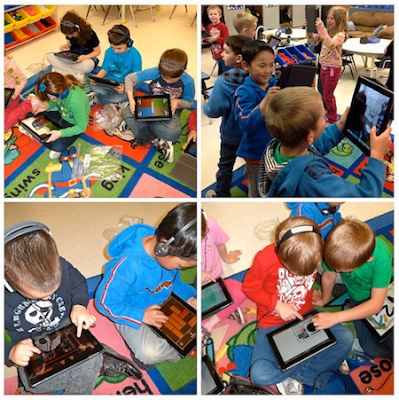 During the Webpage section, a.k.a. the class blog, they discussed how everything they need to know is in the class blog; homework assignments, activities and information that can all be accessed quickly and easily. Next are the Wikis, I'm sure you have heard of Wikis. It is an online website, much like Wikipedia, that is a collaborative information editing website. The kids talked about how if they did not know the answer to a question, or needed to obtain information, they could easily search for information on Wikis, or ask a question with soon to be found answers.
When dealing with videos and online learning, Skype is mostly emphasized to arrange meetings with teachers and students from across the world. Lastly the Nintendo DS are used to decision making and predictions. The students use them to play NintenDogs, which is a game where you take care of a virtual dog. If you wish to watch the video and find out more information on your class click the link to view her video Little Kids...Big Potential.
Video #2:
Now the second video describes Kathy's beginnings of learning through technology. It all started ten years ago when she was given five computers that turned into this huge snowball effect of learning. She began wanted to make the computers useful and find information and lessons where the computers could be manipulated by her students. She embarked on a journey of teaching herself how to do webpages and blogs. Kathy was also able to get funding. And just look at how things turned out? Her classroom now inspires education systems all across the world.
She also talks about the various challenges she faces throughout this journey. When asked if every teacher should be technological literate she answered with, "Absolutely, technology is not going to go away, it is here to stay." She talked about how doing a simple spread sheet, was technological literacy from twenty years ago. She stated that, "We have to keep learning.", to find a way that works for you and how you or your students learn best.
Video #3 & #4:
Video three picks off with Dr. Strange asking Kathy where you should start, as far as technology in the classroom goes. She believes you should start from where you are interested in and go from there; if you are interested in video, you should start there and move on. Same with photos or blogs, everyone is different and no method is fit to every student or teacher.

The fourth video consisted of the students asking Kathy questions details questions. One example asked from a Physical Education major was, "How often do you use the blogs?" This question is perfect because it is something I have always wanted to know about Kathy's classroom. She answered by explaining that it depends on the year, but usually twice a week. Some examples of some good questions where, "Do you think Facebook could be used for education?", "How do you protect your students from potential harmful information?" and so on.
Final Thoughts
As I talked about in the first paragraphs, I adore Kathy Cassidy as a teacher and as a person. I feel like I have learned so much from her already and I have never seen her in my life. I think that it is crazy for someone to have that much impact on you from someone in a different country. She has given me such an effective model for the framework of my future classroom.
I believe the world-wide audience is a deciding factor in why I intend to use ALL of the techniques she practices. She has shown me that students can learn in new ways and how effective it actually can be. Also, all of these tools tie in so many subjects. Blogging for language, literature and grammar, and Wiki for science and other various subjects.
Let's not forget the major factor in all this learning...technology. As she said in an earlier video, spread sheets were acceptable twenty years ago. Imagine how advanced technology will be by the time these students get to college. Using these tools in the classroom can prepare students for the advancing technologically literate society. I cannot wait change and enrich my students life through technology and blended learning.
Part of my enthusiasm comes from a previous C4T and C4K posts and from exploring her blog. If you haven't already heard about Kathy Cassidy or have read about her on previously on my blog...you know who I am talking about. For those of you who don't Kathy Cassidy twitter refers to herself and her learning style as a "Grade one teacher inviting the world into her classroom".
Her classroom has achieved that goal of reaching a worldwide audience, and it is truly inspiring and motivating her students to learn in a new way. through the use of classroom and individual student's blogs to Skyping with people half-way across the world. Kathy Cassidy has become one of the most inspiring 21st century teachers and her blog has become a reference tool in crafting my future career as well as my current educational path.
Video #1:
The first video I watched was of Kathy Cassidy's class and how their classroom blends learning with technology It involved going a little more in depth, through the use of videos, pictures and narration by the students, to show us the various technological tools they use in their classroom. It showed pictures of the student's blog, videos of their classroom skyping, pictures of collaborative blog work.
The video was divided into five parts. Blogs, Webpage, Wikis, Video, and Nintendo DS, In the back ground, the students narrate the video. As you go through each stage, you hear the students describe what tool their are using, what it does, and how it is useful. For example, in the Blog section, students talked about commenting and how they use it to connect with other students just like them. They talked about their family being able to view it and also comment. This is also another example about the online audience I have been talking about; it gives the students a sense of purpose behind their work, they want to make others proud.
 During the Webpage section, a.k.a. the class blog, they discussed how everything they need to know is in the class blog; homework assignments, activities and information that can all be accessed quickly and easily. Next are the Wikis, I'm sure you have heard of Wikis. It is an online website, much like Wikipedia, that is a collaborative information editing website. The kids talked about how if they did not know the answer to a question, or needed to obtain information, they could easily search for information on Wikis, or ask a question with soon to be found answers.
When dealing with videos and online learning, Skype is mostly emphasized to arrange meetings with teachers and students from across the world. Lastly the Nintendo DS are used to decision making and predictions. The students use them to play NintenDogs, which is a game where you take care of a virtual dog. If you wish to watch the video and find out more information on your class click the link to view her video Little Kids...Big Potential.
Video #2:
Now the second video describes Kathy's beginnings of learning through technology. It all started ten years ago when she was given five computers that turned into this huge snowball effect of learning. She began wanted to make the computers useful and find information and lessons where the computers could be manipulated by her students. She embarked on a journey of teaching herself how to do webpages and blogs. Kathy was also able to get funding. And just look at how things turned out? Her classroom now inspires education systems all across the world.
She also talks about the various challenges she faces throughout this journey. When asked if every teacher should be technological literate she answered with, "Absolutely, technology is not going to go away, it is here to stay." She talked about how doing a simple spread sheet, was technological literacy from twenty years ago. She stated that, "We have to keep learning.", to find a way that works for you and how you or your students learn best.
Video #3 & #4:
Video three picks off with Dr. Strange asking Kathy where you should start, as far as technology in the classroom goes. She believes you should start from where you are interested in and go from there; if you are interested in video, you should start there and move on. Same with photos or blogs, everyone is different and no method is fit to every student or teacher.

The fourth video consisted of the students asking Kathy questions details questions. One example asked from a Physical Education major was, "How often do you use the blogs?" This question is perfect because it is something I have always wanted to know about Kathy's classroom. She answered by explaining that it depends on the year, but usually twice a week. Some examples of some good questions where, "Do you think Facebook could be used for education?", "How do you protect your students from potential harmful information?" and so on.
Final Thoughts
As I talked about in the first paragraphs, I adore Kathy Cassidy as a teacher and as a person. I feel like I have learned so much from her already and I have never seen her in my life. I think that it is crazy for someone to have that much impact on you from someone in a different country. She has given me such an effective model for the framework of my future classroom.
I believe the world-wide audience is a deciding factor in why I intend to use ALL of the techniques she practices. She has shown me that students can learn in new ways and how effective it actually can be. Also, all of these tools tie in so many subjects. Blogging for language, literature and grammar, and Wiki for science and other various subjects.
Let's not forget the major factor in all this learning...technology. As she said in an earlier video, spread sheets were acceptable twenty years ago. Imagine how advanced technology will be by the time these students get to college. Using these tools in the classroom can prepare students for the advancing technologically literate society. I cannot wait change and enrich my students life through technology and blended learning.
Monday, October 28, 2013
C4T #3
I must say C4T #3 has been my favorite so far. Maybe you have heard of it...the blog that goes by the name of #WmChamberlain His name is William Chamberlain and he is an award winning teacher and blogger that incorporates learning through innovating technology such as the blog I was assigned for C4T #3. This blog is dedicated to his classroom that consist of assignments, discussions, questions, videos, etc. Now I'm not sure what grade in particular he teaches but I did see in a earlier post about an eight grade class.

The looks of the blog alone are enough to capture your attention and draw you in. The purple beach sunset, the chill vibes, the elaborate pictures; they all make you want to find out what this blog is about. Let's talk about the picture you see here; that's a picture that belongs to the post I was instructed to comment on. Just what was this post about? Washington's famous crossing of the Delaware. Then they were instructed to write a persuasive paper on the point of view from two women during this time period; Molly Pitcher: Why Women Belong on the Battlefield or Abigail Adams: Why Women Deserve Suffrage. Followed by a inspiring paragraph by Abigail Adams. You can read it by clicking on the link in the first paragraph.
Comment #1:
When I was preparing for my my comment, I was skimming his page to find more about himself and his blog. During my search I discovered his About Me tab. Contained in this tab was a multitude of recognition, speeches and presentations, all by/for Mr. William Chamberlain. Here are some examples: "I presented a session at METC in February 2011 on Comments4Kids, a blog and hash tag on Twitter that promotes the leaving comments on students and teacher blog posts." (Sound Familiar?). Or here's another one, "I have been a guest on several BAM Radio education podcasts." Very Cool!
I started out with the usual introductory sentence than proceeded to leave my comment. I didn't waste any time explaining Comments 4 Teachers because I already knew he was involved in Comments 4 Kids. I let him know first thing how much this blog has already inspired me. He is incorporating technology and learning so fluently and effortlessly. I was honored to have his blog. In my comment, I told him that this post was special because it gave instructions to an assignment, while also being informative; informative enough to where I was able to learn something new from this post also, not just from people in the class!
There was a certain sentence in Mrs. Adam's words to her husband that caught my attention, and I discussed this in my comment. The sentence was, "Remember all Men would be tyrants if they could." This topic is very interesting to me because feminism is still a broadly noticed topic in today's society. I left a story in the comment about an interesting story I had once in a Western Civ. 2 class.
Comment #2:
The second comment for C4T #3 is posted on the Mr. Chamberlains latest post. On this post Mr. Chamberlain is discussing his latest insight. While commenting on another blog, he had an "epiphany" of some sort. When I looked at the blog he was talking about, I understood why he had his epiphany. I am not going to say much about that blog but I am going to leave you the blog title in case you want to check it out yourself. I highly recommend it, it was very interesting. The title was "Student Achievement is Not The Same as Student Learning." (http://ideasandthoughts.org/2013/10/21/student-achievement-is-not-the-same-as-learning/)
He talks about how the hard fact of assessment is when you have to show it to a third party such as a parent or guardian. He pointed out that the education system does not have completely accurate ways of determining what our students have learned; that students only allow us to know what they want us to know and only show us what they want to show us. He said that assessments can be incompetent and do not show all of what the student has actually learned. He told the audience that they best way to assess what a student has learned and obtained is by having an actually conversation with them, and it involves sitting them down and just having a casual conversation.
Mr. Chamerblain said he just had a parent/teacher conference at his school last week and began to wonder why they did not have regular meetings with the student, their parent/guardian, and of course the teacher. Hmmm, good question...why doesn't the education system do a lot of things?
Well, for my comment I attempted to empathize and join in on the insight of the post. I started off by telling him that he poses a very interesting question. Assessments and grades really do only go so far when dealing with how much students actually learn. Because after all, students really have the power to keep their intelligence hidden, and that is a major fallacy in assessing students. I told him Dr. Strange, my EDM 310 professor, always tells us he wants to do away with grades completely. Instead you would observe students work and assess whether they are progressing and advancing in whatever subject area it may be.
I told him therefore I think it is a great idea. With this the students can show what they know under less pressure. You lesson plans would be more efficient, you may be able to find common ground among the students, and it's a great way to gain insight about what your students feelings are about the lessons.
However there may be a fallacy in this because you know how nervous children get around their parents, but if the students were accustomed to this pattern, maybe it would not be so difficult to open up to parents about grades and to get them involved. I told him I don't see why school have not already tried this and that it could not be that difficult to get approved and worked into a schedule, and that each class could personalize their own Student-Parent-Teacher Meetings. What do you think?

The looks of the blog alone are enough to capture your attention and draw you in. The purple beach sunset, the chill vibes, the elaborate pictures; they all make you want to find out what this blog is about. Let's talk about the picture you see here; that's a picture that belongs to the post I was instructed to comment on. Just what was this post about? Washington's famous crossing of the Delaware. Then they were instructed to write a persuasive paper on the point of view from two women during this time period; Molly Pitcher: Why Women Belong on the Battlefield or Abigail Adams: Why Women Deserve Suffrage. Followed by a inspiring paragraph by Abigail Adams. You can read it by clicking on the link in the first paragraph.
Comment #1:
When I was preparing for my my comment, I was skimming his page to find more about himself and his blog. During my search I discovered his About Me tab. Contained in this tab was a multitude of recognition, speeches and presentations, all by/for Mr. William Chamberlain. Here are some examples: "I presented a session at METC in February 2011 on Comments4Kids, a blog and hash tag on Twitter that promotes the leaving comments on students and teacher blog posts." (Sound Familiar?). Or here's another one, "I have been a guest on several BAM Radio education podcasts." Very Cool!
I started out with the usual introductory sentence than proceeded to leave my comment. I didn't waste any time explaining Comments 4 Teachers because I already knew he was involved in Comments 4 Kids. I let him know first thing how much this blog has already inspired me. He is incorporating technology and learning so fluently and effortlessly. I was honored to have his blog. In my comment, I told him that this post was special because it gave instructions to an assignment, while also being informative; informative enough to where I was able to learn something new from this post also, not just from people in the class!
There was a certain sentence in Mrs. Adam's words to her husband that caught my attention, and I discussed this in my comment. The sentence was, "Remember all Men would be tyrants if they could." This topic is very interesting to me because feminism is still a broadly noticed topic in today's society. I left a story in the comment about an interesting story I had once in a Western Civ. 2 class.
Comment #2:
The second comment for C4T #3 is posted on the Mr. Chamberlains latest post. On this post Mr. Chamberlain is discussing his latest insight. While commenting on another blog, he had an "epiphany" of some sort. When I looked at the blog he was talking about, I understood why he had his epiphany. I am not going to say much about that blog but I am going to leave you the blog title in case you want to check it out yourself. I highly recommend it, it was very interesting. The title was "Student Achievement is Not The Same as Student Learning." (http://ideasandthoughts.org/2013/10/21/student-achievement-is-not-the-same-as-learning/)
He talks about how the hard fact of assessment is when you have to show it to a third party such as a parent or guardian. He pointed out that the education system does not have completely accurate ways of determining what our students have learned; that students only allow us to know what they want us to know and only show us what they want to show us. He said that assessments can be incompetent and do not show all of what the student has actually learned. He told the audience that they best way to assess what a student has learned and obtained is by having an actually conversation with them, and it involves sitting them down and just having a casual conversation.
Mr. Chamerblain said he just had a parent/teacher conference at his school last week and began to wonder why they did not have regular meetings with the student, their parent/guardian, and of course the teacher. Hmmm, good question...why doesn't the education system do a lot of things?
Well, for my comment I attempted to empathize and join in on the insight of the post. I started off by telling him that he poses a very interesting question. Assessments and grades really do only go so far when dealing with how much students actually learn. Because after all, students really have the power to keep their intelligence hidden, and that is a major fallacy in assessing students. I told him Dr. Strange, my EDM 310 professor, always tells us he wants to do away with grades completely. Instead you would observe students work and assess whether they are progressing and advancing in whatever subject area it may be.
I told him therefore I think it is a great idea. With this the students can show what they know under less pressure. You lesson plans would be more efficient, you may be able to find common ground among the students, and it's a great way to gain insight about what your students feelings are about the lessons.
However there may be a fallacy in this because you know how nervous children get around their parents, but if the students were accustomed to this pattern, maybe it would not be so difficult to open up to parents about grades and to get them involved. I told him I don't see why school have not already tried this and that it could not be that difficult to get approved and worked into a schedule, and that each class could personalize their own Student-Parent-Teacher Meetings. What do you think?
C4K for October
Comment 1:
Ah yes, the "Comments 4 Kids"...October edition! Let me start you off by introducing you guys to a very interesting, motivational, inspiring, and insightful blog for my first C4K of October. This C4K was very special to me, mainly due to the fact that it is an online female AP government class consisting of seventeen and eighteen year-olds. This blog is a place for them to place their ideas, thoughts, interests, debates and just straight up information. It is nice to sometimes explore the difference of what the secondary school communities are doing compared to what I was doing when I was in school.
This particular blog post was named "An Interactive Understanding of the Government with an Emphasis on Learning Through Modern Example". The class was discussing the recent events with Syria and were left to take a deeper look on the United States ability to wage war through assignments and by reflecting through posts on their blogs. Now, let's take a look at the last four words of the title, learning...of course; now whats next? Through. Where have we heard this word? What does it sounds related to? Aha! Project Based Learning! Now the next two words...Modern Example.
She discusses with you the most engaging part of this topic was discussion given to the class by the teacher that prompted the students to use their imagination to put their own twist on legislation. For example, during their studies on Federalism, they were asked to come up with some of their own laws and amendments. She talked about how the assignment forced the class to take a look at issues our society was facing in this present time. Being able to see what other students across the country thought were of the up-most importance and relevancy of the topic.
Another part I especially enjoyed was the last paragraph, where she talks about how she has never enrolled for an online, all girl, AP class. She finds herself more and more interested in Politics and worldly issues as CNN has become her homepage and a new growing interest as this subject for a major. She used words like electrified; so I'm sure project based learning has taken place more than once for her in this class.
For the comment I first introduced myself, told her about EDM 310 and talked to her about project based learning and how much I have learned from and about project based learning since starting this class in mid August. Project based learning has been almost the basis of EDM 310 and that you learn by DOING. I told her it was awesome to see someone else learning so much and being so electrified about their class. I discussed with her that she is a perfect example of project based learning can change your view on a subject. It is a new spin on learning! I told her I was excited to see other schools put project based learning to good use and that it was working so great for her. I myself, think it's motivating to see someone or an entire class get this excited about project based learning. Which further more reinforces my positive opinions on project based learning.

Comment #2:
My second comment for the October C4K was for a 7th grader named Jessica whose blog is part of a whole class. There wasn't much information on this class; all I could find was that they were in a 7th grade class. Each classmate had random topics so each students blog was pretty unique. The student's blog I commented on however was a girl named Jessica. This is all the personal information I know about Jessica. However I did learn a lot in a short amount of time from reading the post she wrote on October 7, 2013.
 I want my audience to read her post so that while I discuss it they will have an idea of where I am coming from when evaluating her paragraph. Now if you read the paragraph to the left, you will see she had many grammatical errors. She seems like she is struggling in the language department and has not have the adequate amount of learning and practicing and has not competent teachers throughout schooling. Honestly, I do not know how to go about correcting a younger students blog, if I have the power, or how it would affect them. I know this is something I could improve on.
Next her sentences sound as if she is uninterested, and inattentive. From the looks of it she has never used a blog before so this is her first experience with literacy through technology. I just feel as if she had a list of questions to answer and she non nonchalantly listed them off. However when you reach the end of the paragraph things start to get a little bit more personal as she is describing her feelings and attitudes towards the first day of school. "The first thing I felt is that I was shaking of sacredness and I also felt butterflies in my stomach."
My comment empathized with Jessica. I told her I too had a nervous stomach and butterflies as I entered those intimidating doors every year. I told her I was so scared and nervous about starting high school that me and my best friend went together. Sometimes school is hard when you feel like you can't find a meaning or purpose behind it, but I told her to stay strong. I shared with her one of my favorite quotes regarding education, "Education does not measure intelligence, it measures memory." I told her although sometimes this is the case, true intelligence can be achieved through discipline, learning the material and using it to your advantage. I encouraged her to outsmart the current education system and that she would be in my thoughts.
Comment #3:
My third C4K for October was another blog on kidblog.org by Mr. So's second grade class. When I checked out the teachers personal blog, I learned they were very involved in project based learning and the blended learning cycle. The students are actively using their blogs and the class seems to be blooming. I feel like I always luck out or something on C4K because I get the best students.
 This time it was also a young girl named Jen; discussing her thoughts on the definition of a "hero" for her latest post. When I read it, I could feel emotion oozing from the paragraph. Specifically for this post, students were to describe their thoughts and opinions of a hero, not just a textbook definition. As well as their opinion of it they were to explain why, how, or what experiences brought them to believe this.
Her definition was strong and you could tell she was being sincere and open. It has to be hard, for anyone her age, to express emotion openly and freely without being condemned. It read, "A hero to me is someone who is right beside you to save you." Followed by sentences of reasons why her mom is so special to her. In one sentence she says, "My mom is my hero because when I get hurt she takes me inside and puts bandages and when I have the flu she takes care of me." One of the last sentences reads, "It makes her a hero because when I get hurt she is always with me."
It really does make me feel warm inside knowing whoever this young girl is, has someone so special she could trust. I began my comment with compliments. I told her I loved the post and that is was very detailed and very descriptive. I applauded her prowess of expressing emotion. I told her I could feel the emotion she poured into this post. I let her know that sometimes it's hard to express honest emotion, especially in school.
Lastly I admired her writing skills. then I expressed my thanks and gratitude for letting me be a part of her blog and letting me read something so honest. I am so glad I get to be a part of these students learning experiences and vice versa. I am also learning so much from these students.
Comment #4:
Lately I have been more than impressed with the blogs I've been getting to comment on. I am so pleased to see more and more children becoming more literate through technology and blog posts such as these. For my last "Comments 4 Kids" in October, I was assigned Haylee J. from Mrs Gelde's class located in Nebraska! However, I'm not quite sure the grade to which this blog belongs. C4K is really starting to show me the use and importance of kidblog.org also. Nearly every students blog I have commented on has used kidblog.org
Haylee's latest comment was about her favorite season. Her favorite season, as well as many others, is autumn. Off the bat I liked how she preferred the word Autumn over fall, it makes the post a little more descriptive. Although the post still would have been excellent if she hadn't used the word autumn. Haylee's post was very descriptive and interactive. Within the first two sentences she already has the audience engaged in the post by asking what their favorite season was. Then proceeds to get vivid examples of why this is her favorite season.
She gave examples such as, "I love how all the leaves turn red, yellow, and orange." And, "I can smell the sweet pumpkin bars just came out of the oven and we eat them all up." Then she adds activities and experiences she has had with autumn that brings her to love it so much. One example is, "The activities I do are going to pumpkin patches, going on long walks and playing with friends."

When she finished her paragraph she ended with the beginning in mind. In school you are taught to end your writing with a summary or restate your opening paragraph. Haylee did a great job of acknowledging this technique and also putting it into practice. I want my audience to be able to see her paragraph if they want to I am leaving a picture beside this paragraph if you would like to read it.
Of course when I left a comment, I left my name, and all that good stuff. But I was more focused on being part of her audience and giving her praise for what i have seen and read today in her paragraph. I mean if I am putting it all out on the table here, this post is better than some of the posts I've seen from some students in my own EDM 310 class. It really does make me feel good when I see student excelling in what some would consider a quite difficult task of running a blog (especially educational).
Ah yes, the "Comments 4 Kids"...October edition! Let me start you off by introducing you guys to a very interesting, motivational, inspiring, and insightful blog for my first C4K of October. This C4K was very special to me, mainly due to the fact that it is an online female AP government class consisting of seventeen and eighteen year-olds. This blog is a place for them to place their ideas, thoughts, interests, debates and just straight up information. It is nice to sometimes explore the difference of what the secondary school communities are doing compared to what I was doing when I was in school.
This particular blog post was named "An Interactive Understanding of the Government with an Emphasis on Learning Through Modern Example". The class was discussing the recent events with Syria and were left to take a deeper look on the United States ability to wage war through assignments and by reflecting through posts on their blogs. Now, let's take a look at the last four words of the title, learning...of course; now whats next? Through. Where have we heard this word? What does it sounds related to? Aha! Project Based Learning! Now the next two words...Modern Example.
She discusses with you the most engaging part of this topic was discussion given to the class by the teacher that prompted the students to use their imagination to put their own twist on legislation. For example, during their studies on Federalism, they were asked to come up with some of their own laws and amendments. She talked about how the assignment forced the class to take a look at issues our society was facing in this present time. Being able to see what other students across the country thought were of the up-most importance and relevancy of the topic.
Another part I especially enjoyed was the last paragraph, where she talks about how she has never enrolled for an online, all girl, AP class. She finds herself more and more interested in Politics and worldly issues as CNN has become her homepage and a new growing interest as this subject for a major. She used words like electrified; so I'm sure project based learning has taken place more than once for her in this class.
For the comment I first introduced myself, told her about EDM 310 and talked to her about project based learning and how much I have learned from and about project based learning since starting this class in mid August. Project based learning has been almost the basis of EDM 310 and that you learn by DOING. I told her it was awesome to see someone else learning so much and being so electrified about their class. I discussed with her that she is a perfect example of project based learning can change your view on a subject. It is a new spin on learning! I told her I was excited to see other schools put project based learning to good use and that it was working so great for her. I myself, think it's motivating to see someone or an entire class get this excited about project based learning. Which further more reinforces my positive opinions on project based learning.

Comment #2:
My second comment for the October C4K was for a 7th grader named Jessica whose blog is part of a whole class. There wasn't much information on this class; all I could find was that they were in a 7th grade class. Each classmate had random topics so each students blog was pretty unique. The student's blog I commented on however was a girl named Jessica. This is all the personal information I know about Jessica. However I did learn a lot in a short amount of time from reading the post she wrote on October 7, 2013.
 I want my audience to read her post so that while I discuss it they will have an idea of where I am coming from when evaluating her paragraph. Now if you read the paragraph to the left, you will see she had many grammatical errors. She seems like she is struggling in the language department and has not have the adequate amount of learning and practicing and has not competent teachers throughout schooling. Honestly, I do not know how to go about correcting a younger students blog, if I have the power, or how it would affect them. I know this is something I could improve on.
Next her sentences sound as if she is uninterested, and inattentive. From the looks of it she has never used a blog before so this is her first experience with literacy through technology. I just feel as if she had a list of questions to answer and she non nonchalantly listed them off. However when you reach the end of the paragraph things start to get a little bit more personal as she is describing her feelings and attitudes towards the first day of school. "The first thing I felt is that I was shaking of sacredness and I also felt butterflies in my stomach."
My comment empathized with Jessica. I told her I too had a nervous stomach and butterflies as I entered those intimidating doors every year. I told her I was so scared and nervous about starting high school that me and my best friend went together. Sometimes school is hard when you feel like you can't find a meaning or purpose behind it, but I told her to stay strong. I shared with her one of my favorite quotes regarding education, "Education does not measure intelligence, it measures memory." I told her although sometimes this is the case, true intelligence can be achieved through discipline, learning the material and using it to your advantage. I encouraged her to outsmart the current education system and that she would be in my thoughts.
Comment #3:
My third C4K for October was another blog on kidblog.org by Mr. So's second grade class. When I checked out the teachers personal blog, I learned they were very involved in project based learning and the blended learning cycle. The students are actively using their blogs and the class seems to be blooming. I feel like I always luck out or something on C4K because I get the best students.
 This time it was also a young girl named Jen; discussing her thoughts on the definition of a "hero" for her latest post. When I read it, I could feel emotion oozing from the paragraph. Specifically for this post, students were to describe their thoughts and opinions of a hero, not just a textbook definition. As well as their opinion of it they were to explain why, how, or what experiences brought them to believe this.
Her definition was strong and you could tell she was being sincere and open. It has to be hard, for anyone her age, to express emotion openly and freely without being condemned. It read, "A hero to me is someone who is right beside you to save you." Followed by sentences of reasons why her mom is so special to her. In one sentence she says, "My mom is my hero because when I get hurt she takes me inside and puts bandages and when I have the flu she takes care of me." One of the last sentences reads, "It makes her a hero because when I get hurt she is always with me."
It really does make me feel warm inside knowing whoever this young girl is, has someone so special she could trust. I began my comment with compliments. I told her I loved the post and that is was very detailed and very descriptive. I applauded her prowess of expressing emotion. I told her I could feel the emotion she poured into this post. I let her know that sometimes it's hard to express honest emotion, especially in school.
Lastly I admired her writing skills. then I expressed my thanks and gratitude for letting me be a part of her blog and letting me read something so honest. I am so glad I get to be a part of these students learning experiences and vice versa. I am also learning so much from these students.
Comment #4:
Lately I have been more than impressed with the blogs I've been getting to comment on. I am so pleased to see more and more children becoming more literate through technology and blog posts such as these. For my last "Comments 4 Kids" in October, I was assigned Haylee J. from Mrs Gelde's class located in Nebraska! However, I'm not quite sure the grade to which this blog belongs. C4K is really starting to show me the use and importance of kidblog.org also. Nearly every students blog I have commented on has used kidblog.org
Haylee's latest comment was about her favorite season. Her favorite season, as well as many others, is autumn. Off the bat I liked how she preferred the word Autumn over fall, it makes the post a little more descriptive. Although the post still would have been excellent if she hadn't used the word autumn. Haylee's post was very descriptive and interactive. Within the first two sentences she already has the audience engaged in the post by asking what their favorite season was. Then proceeds to get vivid examples of why this is her favorite season.
She gave examples such as, "I love how all the leaves turn red, yellow, and orange." And, "I can smell the sweet pumpkin bars just came out of the oven and we eat them all up." Then she adds activities and experiences she has had with autumn that brings her to love it so much. One example is, "The activities I do are going to pumpkin patches, going on long walks and playing with friends."

When she finished her paragraph she ended with the beginning in mind. In school you are taught to end your writing with a summary or restate your opening paragraph. Haylee did a great job of acknowledging this technique and also putting it into practice. I want my audience to be able to see her paragraph if they want to I am leaving a picture beside this paragraph if you would like to read it.
Of course when I left a comment, I left my name, and all that good stuff. But I was more focused on being part of her audience and giving her praise for what i have seen and read today in her paragraph. I mean if I am putting it all out on the table here, this post is better than some of the posts I've seen from some students in my own EDM 310 class. It really does make me feel good when I see student excelling in what some would consider a quite difficult task of running a blog (especially educational).
I told her that she did an excellent job. The post was very descriptive and you could feel the enthusiasm that went into writing this post. I told her it was very personable and easily relatable. I discussed with her that fall is also my favorite holiday; that the food is great, the temperature is perfect, and that I love the holidays.
She also added a picture which was a very nice touch. Picture somewhat put more ease on the post, so instead of just looking at words, you brain can relax to a nice picture, and it relates to your post. The post was great because she wrote it to where you could emphasis with her while reading the post so many miles away. Good job Haylee!
Friday, October 25, 2013
Blog Post #10
So it is half-way through the semester and I must say that Project Based Learning has by far changed my perspective on teaching. It has given me so many new ideas, and new way of approaching learning through technology. In this week's blog post we were to watch the video http://www.cmu.edu/randyslecture/ titled "Randy Pausch's Last Lecture". Randy Pausch was an inspiration for educators and students everywhere who drastically changed the way we veiw Prject Based Learning today. This video is of Randy's Last Lecture before he passed in July of 2008 due to pancreatic cancer. In this video he explains his life, beginning from his childhood dreams to his crazy career to his last life lessons. If you didn't know who Randy Pausch was before watching this video, you certainly will after.
Randy Pausch was like any other typical child, was full of dreams and imagination. Pausch's list of childhood dreams seems to match up the untamed imagination of any child; being in zero gravity, playing in the NFL, being Captain Kirk, winning stuffed animals. Pausch also had dreams of being a Disney Imagineer, and just like any child, these come up with some huge dreams! Pausch talks about completing his list of dreams, first starting with being in zero gravity then working his way into the more...larger of dreams. Pausch received his bachelors degree from Brown University and eventually achieved his dream of becoming a Disney Imagineer.
After competing his master and revieving his PhD from Carnegie Mellon, he began working on a project at CMU's Entertainment Technology Center called "Building Virtual Worlds". Where fifty students from CMU's art, design, and drama classes were broken up into groups and told to create a virtual world from scratch. With it being the first year a project like this had ever been attempted, Pausch did not know what to expect. However when he came back two weeks later, the work he saw blew him out of the water, it was phenomenal.
His words in the video were, "Ten years as a professor and I had no idea what to do next." So he calls up his mentor and his mentor tells him to tell his students something out of the ordinary; he told Pausch to say, "Guys, I know this is pretty good but I know you can do better." But if Pausch was so pleased with the students work then why would he say such a thing? Well, Pausch's mentor explains to him that he obviously does not know where the bar should be, and that he would only be doing them a disservice by putting it anywhere.
Oh how true this is. Because no bar was set, throughout the course of a semester, the students kept going and going; creating virtual worlds unlike any he'd ever seen. The video actually showed you one of his group's virtual world. Here are some screen shots.


Pausch also created a masters program that consisted of five virtual reality projects with no book work involved whatsoever, all you time was spent "makin stuff." This program was called "The Dream Fulfillment Factory" and became a HUGE success. It was project based, there were bi-weekly peer evaluations so the students could see where they stood amongst classmates. Along with that, the students and the teachers were given freedom, so students were able to have fun and express themselves and really get creative to come up with some great stuff.
 From this a software for teaching how to work computers was developed by Pausch and other educators called ALICE. In this program kids can make movies and games, all while having no idea they are learning! (Also called "head fake"). Pausch created a program that has sold over a million copies and is used by 10% of colleges in the U.S. For more information on ALICE, you can go to ALICE.org.
Towards the end of the video, Pausch shares the lesson learned from all of this; to never lose your childhood wonders, to help others and to never give up. He told the audience to tell the truth and be honest and apologize; and lastly to focus on others, not yourself.
This video is just another example of Project Based Learning and how effective it is. Pausch even said it himself in the video that you learn from doing. There is so much to be learned from this video, not just that Pausch was a great man and educator, but how he changed education and how he learned through trail and error. This video also comes to show that Project Based Learning can be utilized at any grade level and has been proved so time after time. If you are to take away anything from this video, take away the idea that you can learn by having fun, and that you can learn by starting from something unfamiliar. Project based learning has limitless ideas and opens the door for so many life changing learning experiences.
"
Randy Pausch was like any other typical child, was full of dreams and imagination. Pausch's list of childhood dreams seems to match up the untamed imagination of any child; being in zero gravity, playing in the NFL, being Captain Kirk, winning stuffed animals. Pausch also had dreams of being a Disney Imagineer, and just like any child, these come up with some huge dreams! Pausch talks about completing his list of dreams, first starting with being in zero gravity then working his way into the more...larger of dreams. Pausch received his bachelors degree from Brown University and eventually achieved his dream of becoming a Disney Imagineer.
After competing his master and revieving his PhD from Carnegie Mellon, he began working on a project at CMU's Entertainment Technology Center called "Building Virtual Worlds". Where fifty students from CMU's art, design, and drama classes were broken up into groups and told to create a virtual world from scratch. With it being the first year a project like this had ever been attempted, Pausch did not know what to expect. However when he came back two weeks later, the work he saw blew him out of the water, it was phenomenal.
His words in the video were, "Ten years as a professor and I had no idea what to do next." So he calls up his mentor and his mentor tells him to tell his students something out of the ordinary; he told Pausch to say, "Guys, I know this is pretty good but I know you can do better." But if Pausch was so pleased with the students work then why would he say such a thing? Well, Pausch's mentor explains to him that he obviously does not know where the bar should be, and that he would only be doing them a disservice by putting it anywhere.
Oh how true this is. Because no bar was set, throughout the course of a semester, the students kept going and going; creating virtual worlds unlike any he'd ever seen. The video actually showed you one of his group's virtual world. Here are some screen shots.

Visit the video to see the whole thing!

 From this a software for teaching how to work computers was developed by Pausch and other educators called ALICE. In this program kids can make movies and games, all while having no idea they are learning! (Also called "head fake"). Pausch created a program that has sold over a million copies and is used by 10% of colleges in the U.S. For more information on ALICE, you can go to ALICE.org.
Towards the end of the video, Pausch shares the lesson learned from all of this; to never lose your childhood wonders, to help others and to never give up. He told the audience to tell the truth and be honest and apologize; and lastly to focus on others, not yourself.
This video is just another example of Project Based Learning and how effective it is. Pausch even said it himself in the video that you learn from doing. There is so much to be learned from this video, not just that Pausch was a great man and educator, but how he changed education and how he learned through trail and error. This video also comes to show that Project Based Learning can be utilized at any grade level and has been proved so time after time. If you are to take away anything from this video, take away the idea that you can learn by having fun, and that you can learn by starting from something unfamiliar. Project based learning has limitless ideas and opens the door for so many life changing learning experiences.
"
Subscribe to:
Comments (Atom)